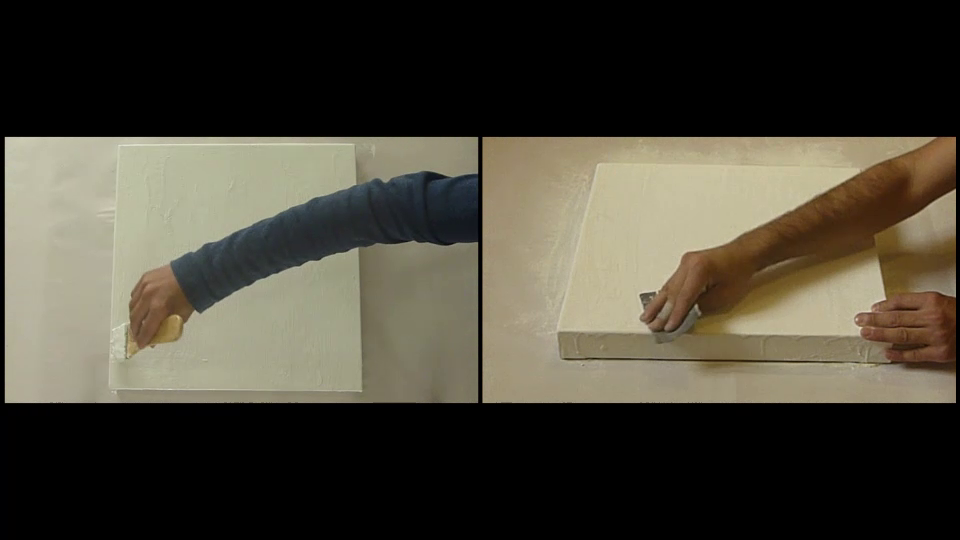
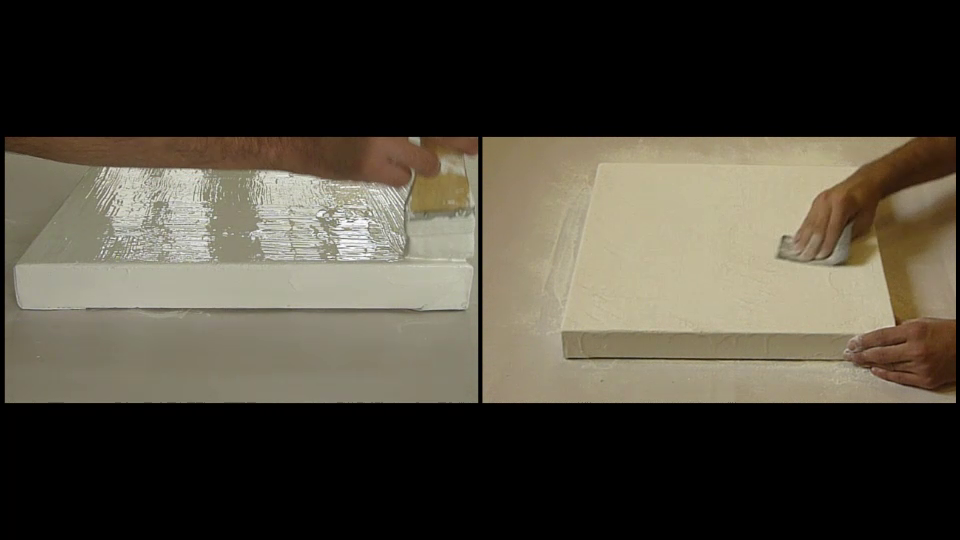
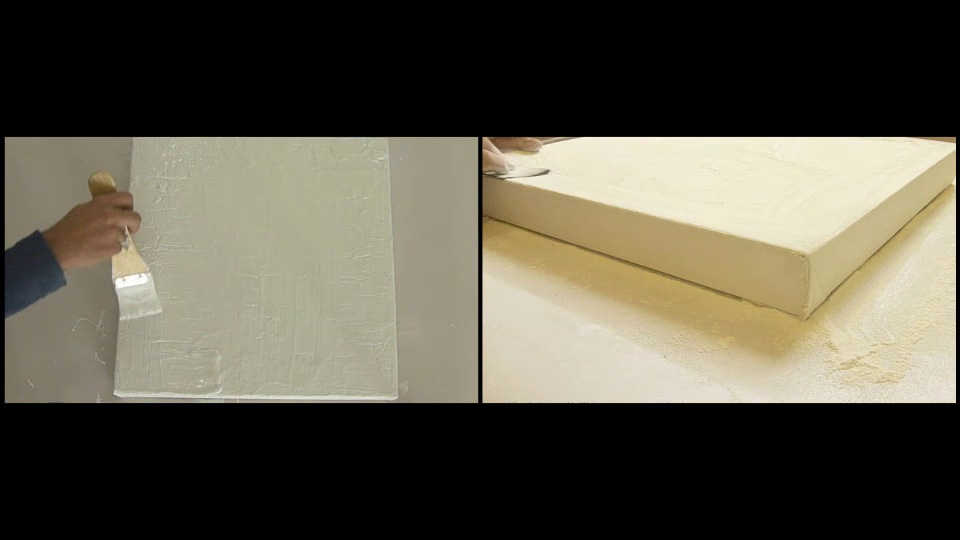
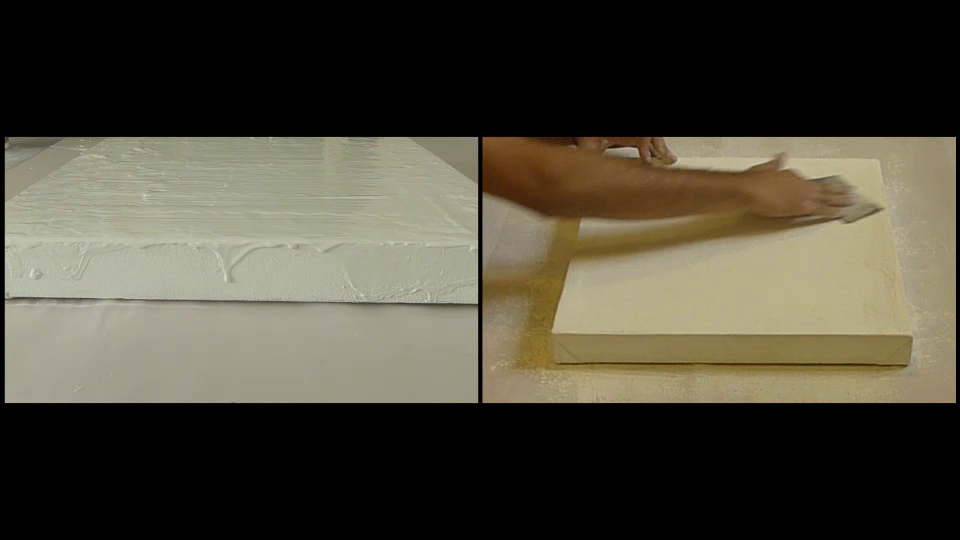
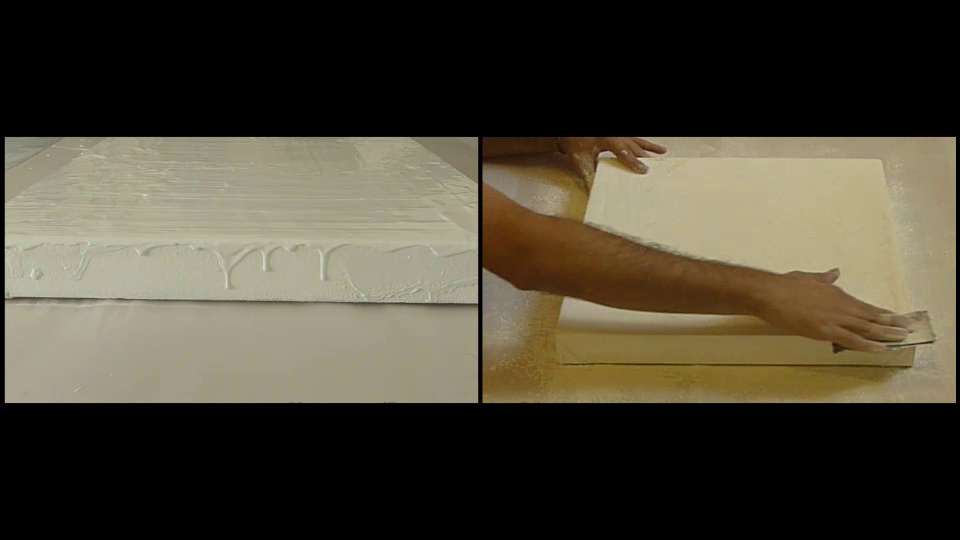
Traditionally, priming is understood as a preliminary stage in painting: a technical process intended to prepare a surface for the subsequent application of paint. This project begins with a simple question: what happens when this preparatory act ceases to be a means and becomes the end itself? Priming is no longer understood as a subordinate stage but as an autonomous pictorial act, in which the preparation of the surface constitutes the painting itself.
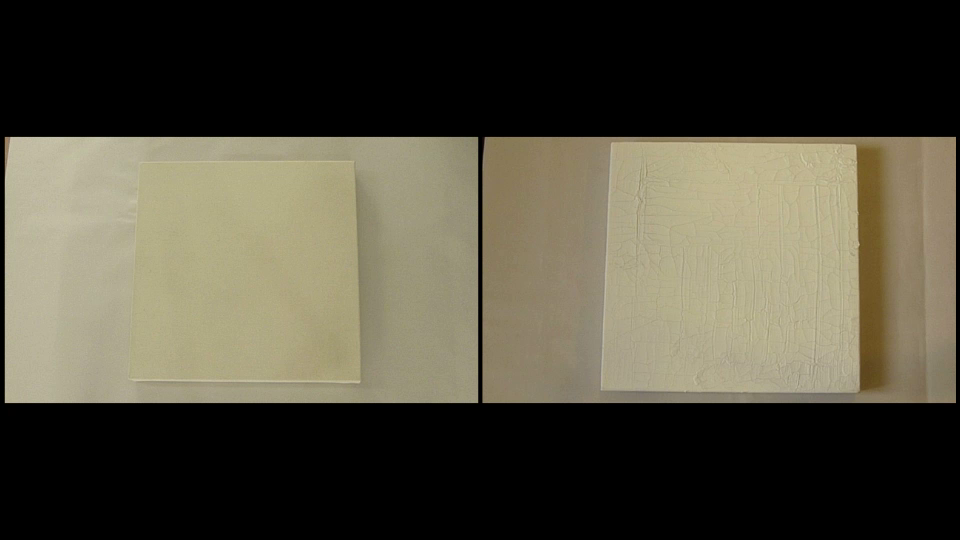
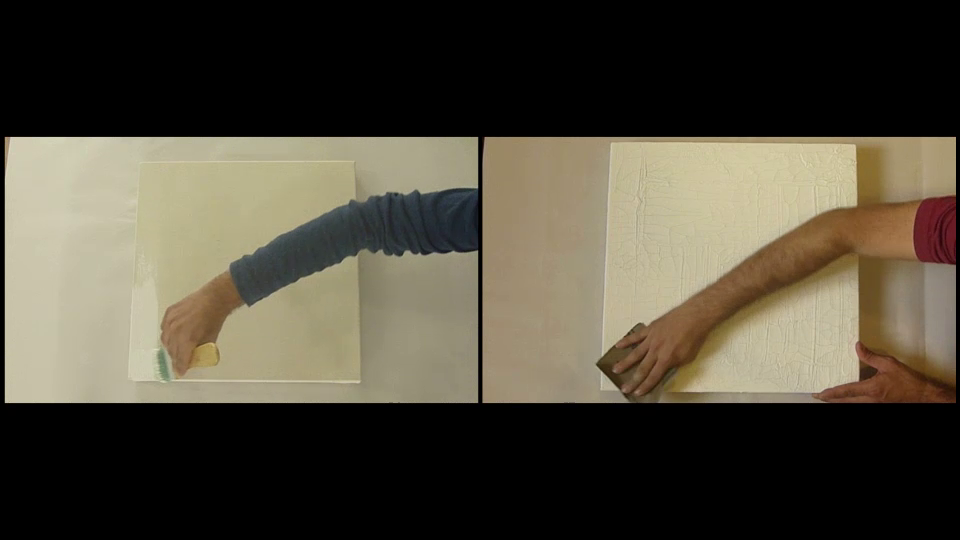
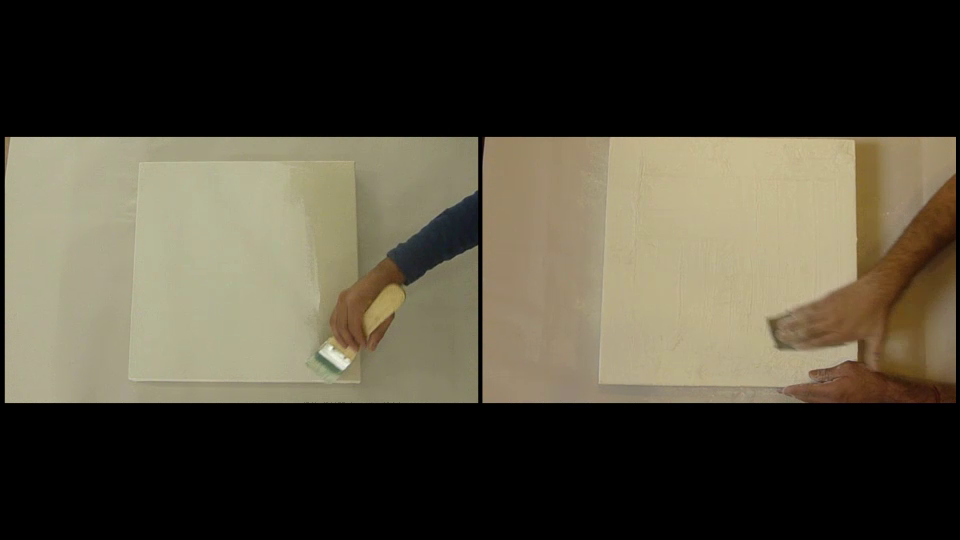
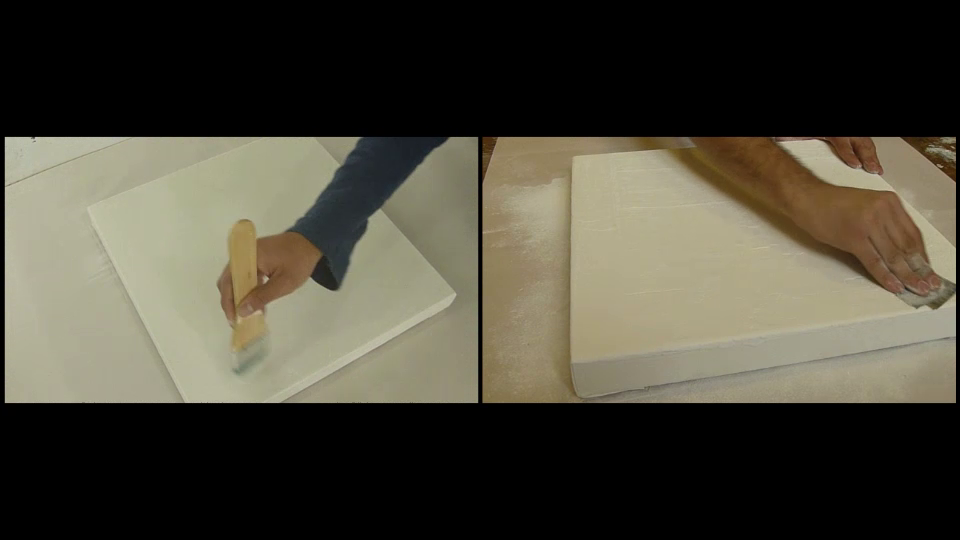
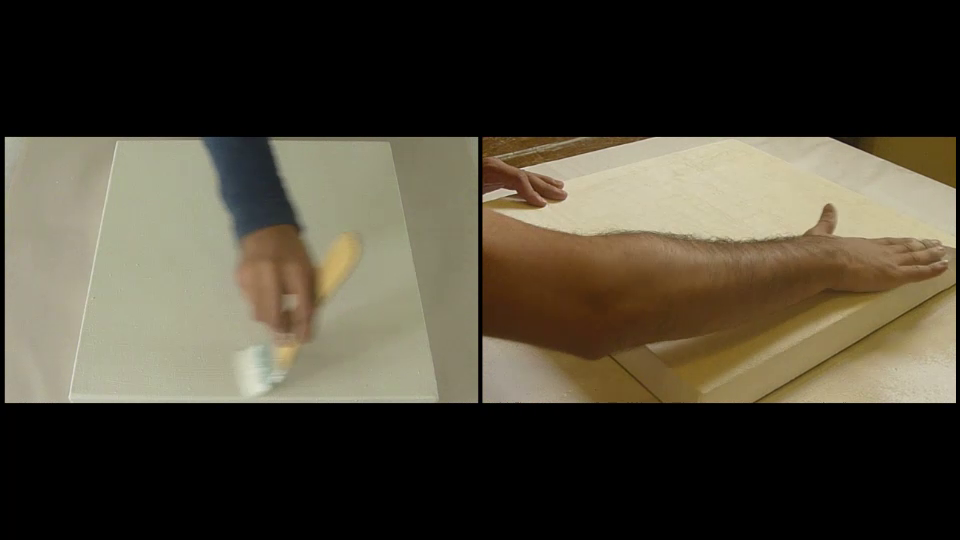
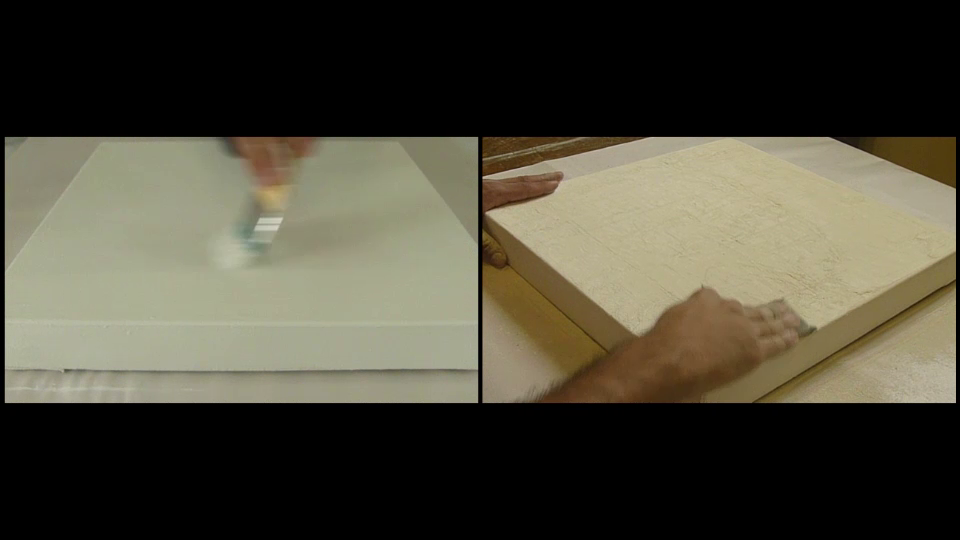
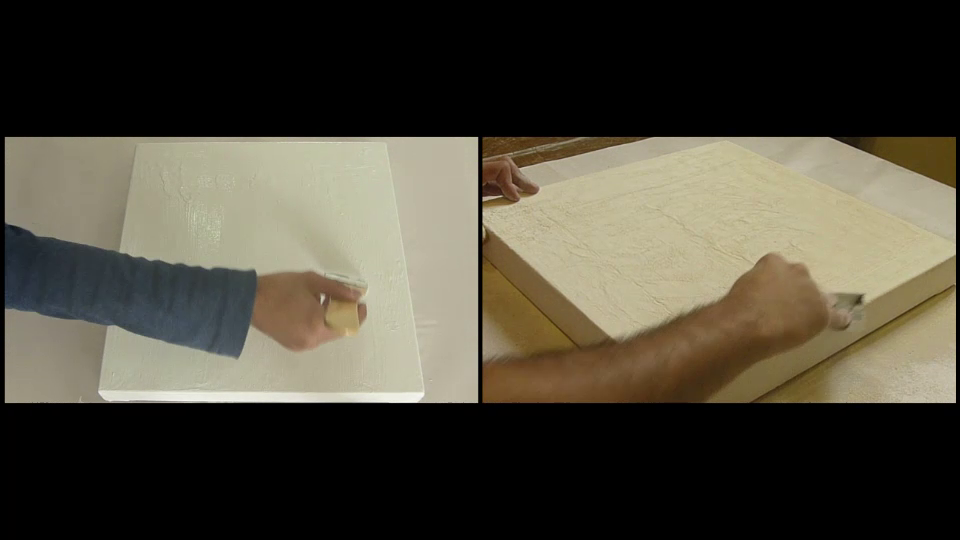
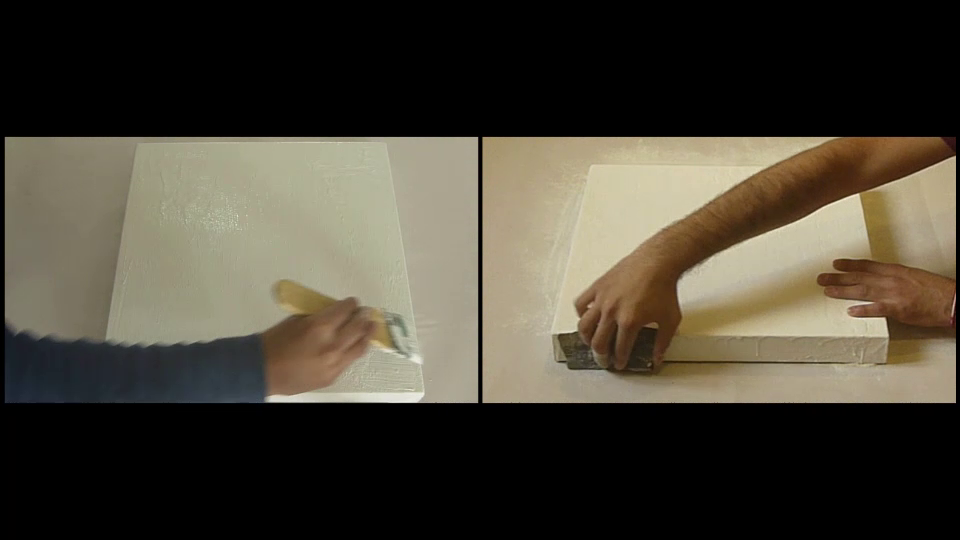
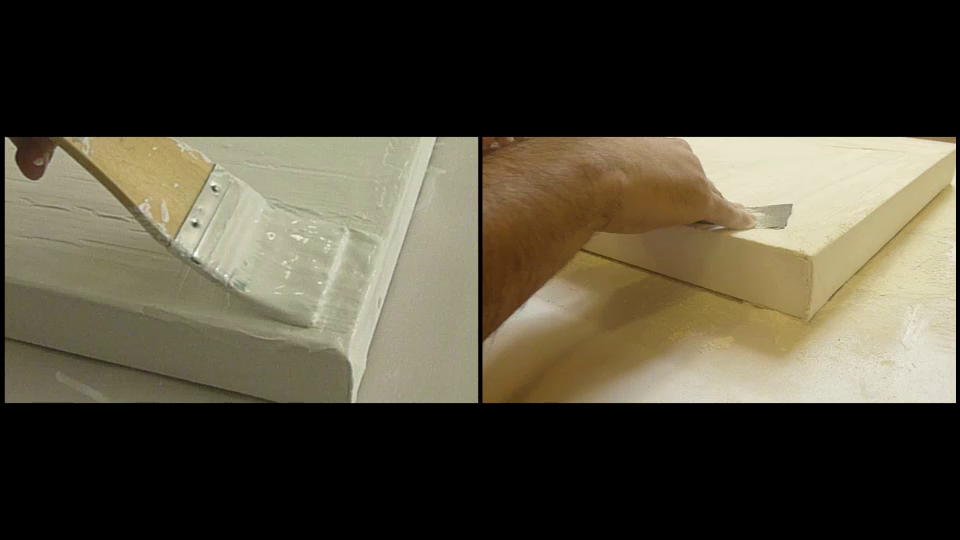
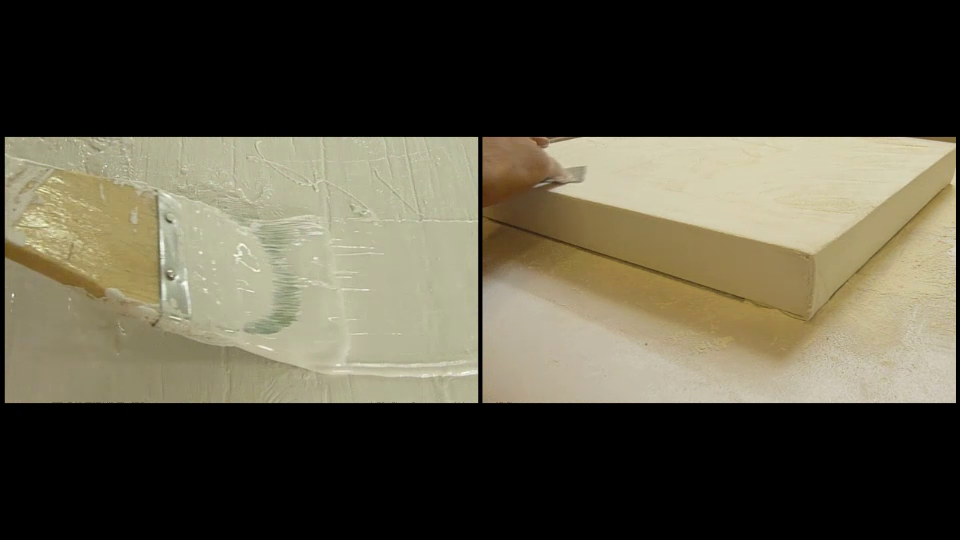
The project is presented through two videos projected simultaneously. In the first, a canvas receives layer upon layer of paint until its surface reaches a considerable thickness. In the second, another canvas is continuously sanded, gradually removing the accumulated layers until the raw fabric is revealed once again.
Both actions unfold simultaneously, establishing opposing movements: while one surface is built up, the other is worn away; while one accumulates matter, the other loses it. Painting is no longer approached as image, but as time, labor, and materiality. The focus shifts from the finished result to the action itself.
By treating both priming and sanding as autonomous actions, the project questions the traditional hierarchy between preparation and painting, between process and result. The preparatory act no longer anticipates a future image; instead, it becomes the central event. What is conventionally understood as the beginning of painting is presented here as its final state.
The continuous acts of adding and removing material form a cycle in which construction and disappearance coexist. Painting no longer functions as representation, but as the physical trace of accumulated time, repeated labor, and material transformation. In this way, priming ceases to be merely a technical preparation and opens itself as a field of pictorial inquiry in its own right.